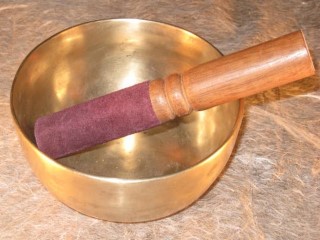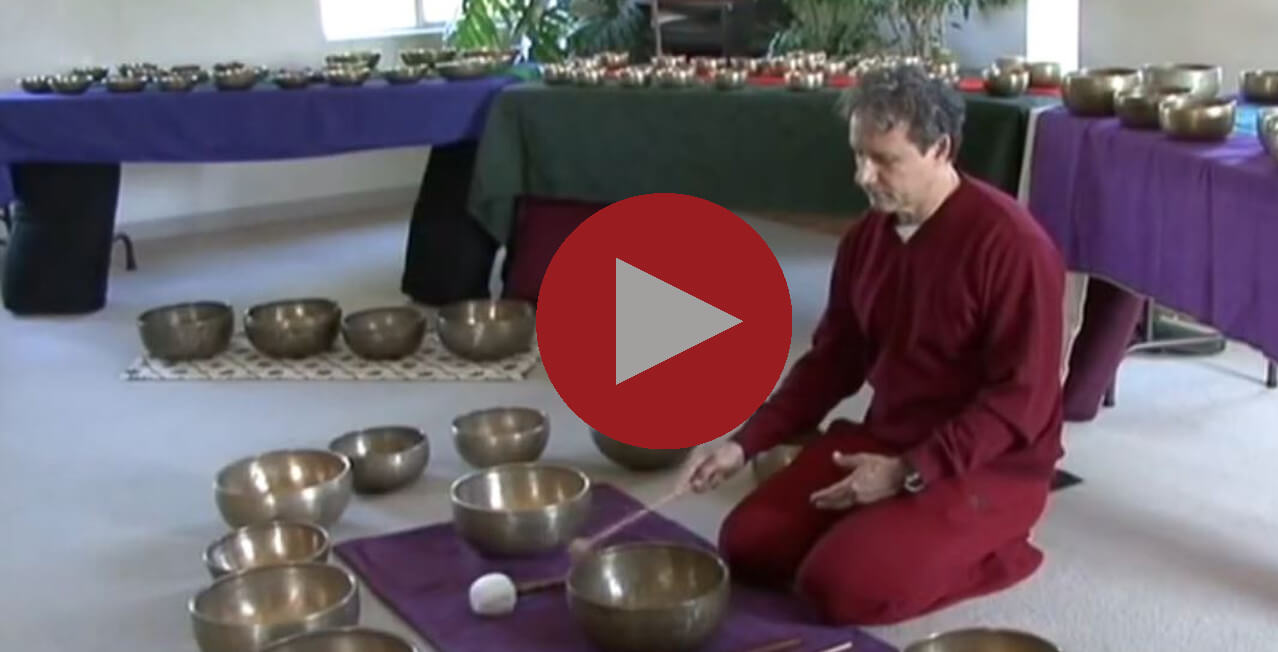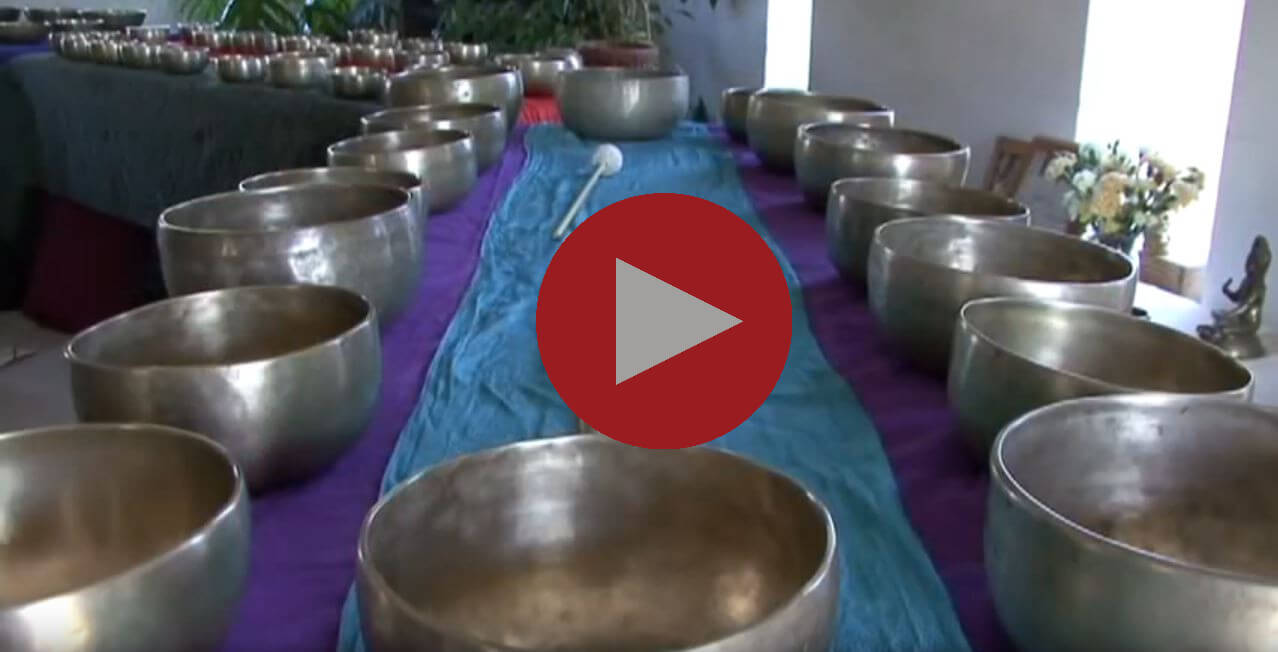









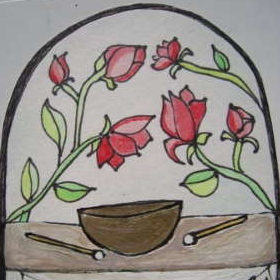


Our brains have evolved to filter out the mundane while it accentuates the important and exceptional. Take a moment and open your ears to the full range of sounds around you. There are layers and layers of sound, from coherent close up sources to the bits and pieces drifting in on the air. To listen deeply is to open our habitual filters and let in the fullness of our sonic environment. Behind those filters lie worlds of consciousness, largely unexplored. Deep listening is an avenue available to all of us. Listening to “nothing”, however, is harder than listening to something – and a wonderful something is the harmonious sweet tones of a singing bowl.
Singing Bowls and Sound
Language gives us the ability to expand our knowledge and experience into new frontiers. The accumulation of knowledge called culture provides a base from which new avenues of exploration can flow. The open-ended nature of Himalayan bowls provide a wonderful medium for creative exploration without the need to refer to any particular tradition or cultural context. Sound is pure and universal, heard the same by all regardless of culture. Interestingly this is not true of color where one’s language and culture can profoundly effect one’s perception. Below is an explanation of deeper listening in a Tibetan cultural context, by no means the only way to experience the depth in the sound of meditation bowls
Three Levels of Practice
In Dzogchen, one of the schools of thought within Tibetan Buddhism, it is said that there are three levels of teaching. These three levels are the outer or the readily apparent, the inner that one becomes aware of when the solid “reality” of the outer is breached and finally the secret most profound teachings. The secret teachings are ones that are passed on once the student has mastered (or in Dzogchen terms stabilized the view of) the inner teachings. The secret teachings involve invoking and experiencing states of pure, unvarnished awareness beyond the operation of karma.
Three Levels of Singing Bowls
With singing bowls the outer level is the sound. The beautiful sound of a fine ancient bowl can lift our spirits, sharpen our minds and heal our bodies. We go into some detail about these outer level benefits in the how to use singing bowls section. The inner level is the use of the singing bowl to bring into ourselves the experiences available in meditation – experiences of one pointed awareness, silence and brilliant mundainety. My conjecture is that this was the primary level on which singing bowls were used in monastic Tibet and by other Himalayan practitioners. The sound was used as a means of cleansing the mind, a way to slow down the emergence of thought and to eliminate the grasping of what thoughts emerge.
The secret level would be going one step further. In Tibetan lucid dreaming practice one may start with the quieting of the mind in the dream state [possibly easier to do than in the waking state] however a more challenging goal is to be able to travel to the “pure lands” to receive teachings from enlightened masters. With meditation bowls the analogous secret level would be to perceive the teachings or transmissions contained within the sound. The singing bowl itself might contain the teaching or the sound alone would alert the sources of the teaching to transmit them through the sound of the bowl to the listener. Not all Himalayan bowls, of course, would be perceived as transmitting a profound secret teaching (unless one is operating at a level where all objects are doing so). The antique objects that would have this quality would likely be ancient ones charged by the intentionality, prayers and practice of their previous owners.
Other Cultural Contexts
One does not need to use a Buddhist or non-theistic frame of reference in order to unwrap successive levels of meaning from the sound of a singing bowl. All it really takes is a willingness to dive into the sound and let it take you where it may. An understanding about how others have navigated this journey can be instructive but don’t let it deflect you from your own individual path of discovery.